


Generic AI advice is easy to find and hard to use. "Streamline your workflows!" Lovely. What does that mean when you've got a full diary and a phone that won't stop ringing?
Sector matters. The British Chambers of Commerce found larger SMEs and B2B professional services firms are leading on AI, while smaller and consumer-facing businesses are lagging. So some of the sectors below are ahead of the pack, while others have an opening.
Here's what AI could do in a working day for four types of business. Treat these as starting points to test, since what suits you depends on your systems and your customers. Where we've done relevant work ourselves at Just Creative People, we've said so.
Dental practices
The morning. Messages left overnight are already sorted, so reception sees who wants a check-up, who's in pain and who wants to rearrange, with urgent cases at the top for a person to deal with.
During the day. When the phone is busy, routine questions about opening hours and whether you take new patients can be answered automatically, leaving reception to look after the patient standing in front of them.
After hours. Enquiries about private treatments can be captured and followed up the next day, while anyone describing an emergency is given the right information about what to do.
Keep human: anything clinical. An AI tool shouldn't be assessing symptoms or advising on treatment. And you'll need to take particular care with patient data.
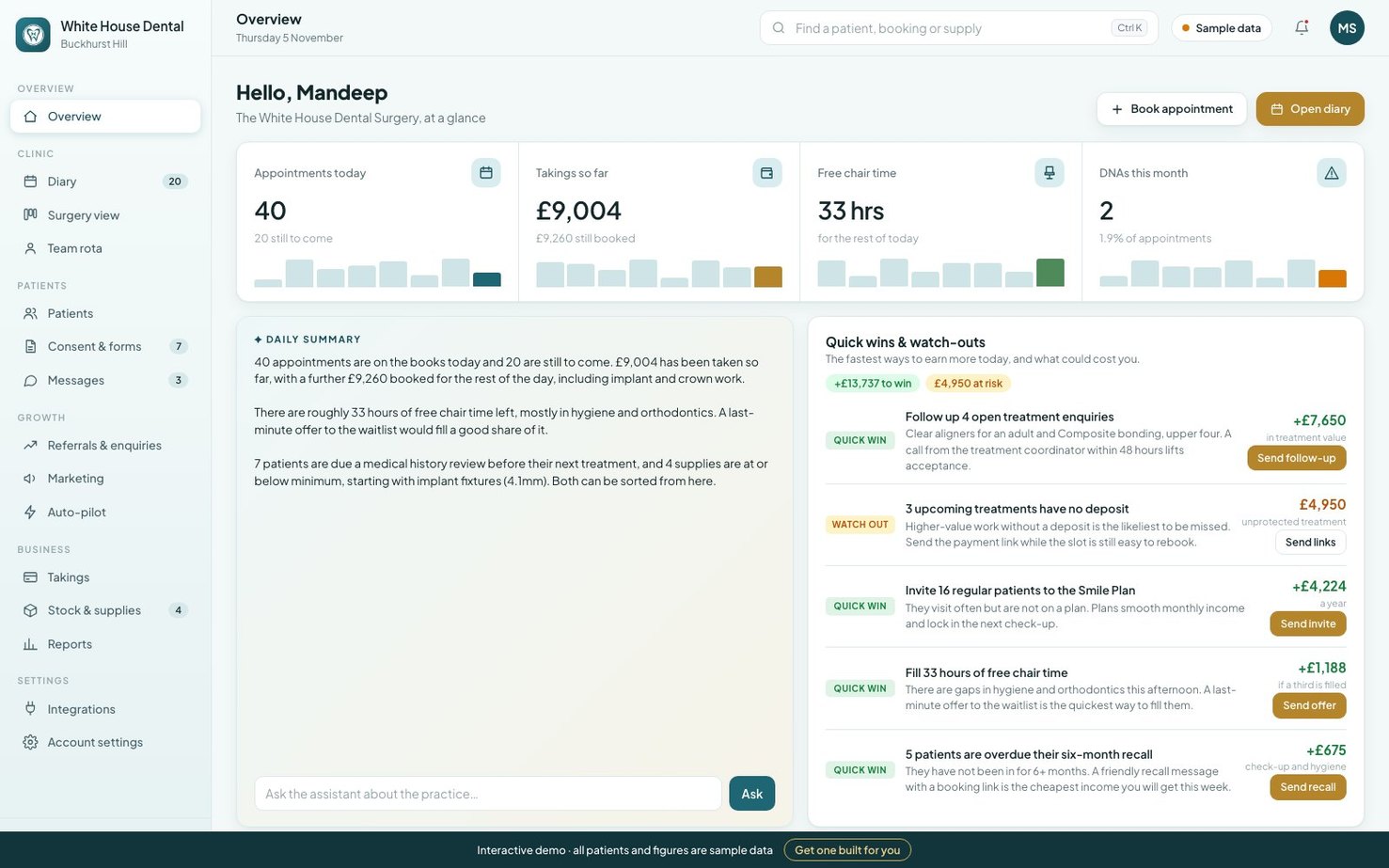
See it on one screen. Our White House Dental dashboard demo has a built-in AI assistant that can see the diary, payments, stock and patients, plus daily AI summaries and quick wins to fill empty chair time.
Don't overlook the website, either. Our work with White House Dental Surgery was a UX-led redesign and rebuild of the website. It delivered a 208% uplift in genuine enquiries in its first six months and filtered out the bogus ones they'd been getting. Before you buy any AI, make sure your website isn't the thing letting you down.
Solicitors and legal services
After hours. People often contact a law firm when something has just gone wrong, and that doesn't always happen between nine and five. The Beehive Legal AI Voice Agent, which we built, answers the firm's out-of-hours calls, explains its services, books calls through calendar integrations, follows up by email and sends leads to the CRM.
On the website. For Bridge Solicitors, dental negligence specialists, we built a site that guides people from their first question to a no-win, no-fee claim, with an AI assistant on hand around the clock.
In the office. AI can help summarise long documents, prepare first drafts of routine letters and turn notes into structured records, with everything checked by a qualified person.
Keep human: legal advice, full stop. Be clear about what any AI tool can and can't say, and check your professional and data protection obligations before anything goes live.
Accountancy and bookkeeping practices
Deadline season. With Making Tax Digital for Income Tax extending to more sole traders and landlords from April 2027, practices may have more clients needing regular contact. Automated reminders can ask for what's missing, then stop once it arrives.
New work. A deadline approaching can automatically open a job and assign it, so nothing relies on someone's memory or a spreadsheet.
The inbox. AI can sort incoming client emails, draft routine replies and pull key details from documents for a person to check.
Explaining the numbers. AI can help turn a client's figures into a plain-English first draft for you to check and add your own judgement to.
Keep human: tax advice and anything you'd put your name to. And be very careful what goes into general-purpose AI tools, since client financial information is sensitive.
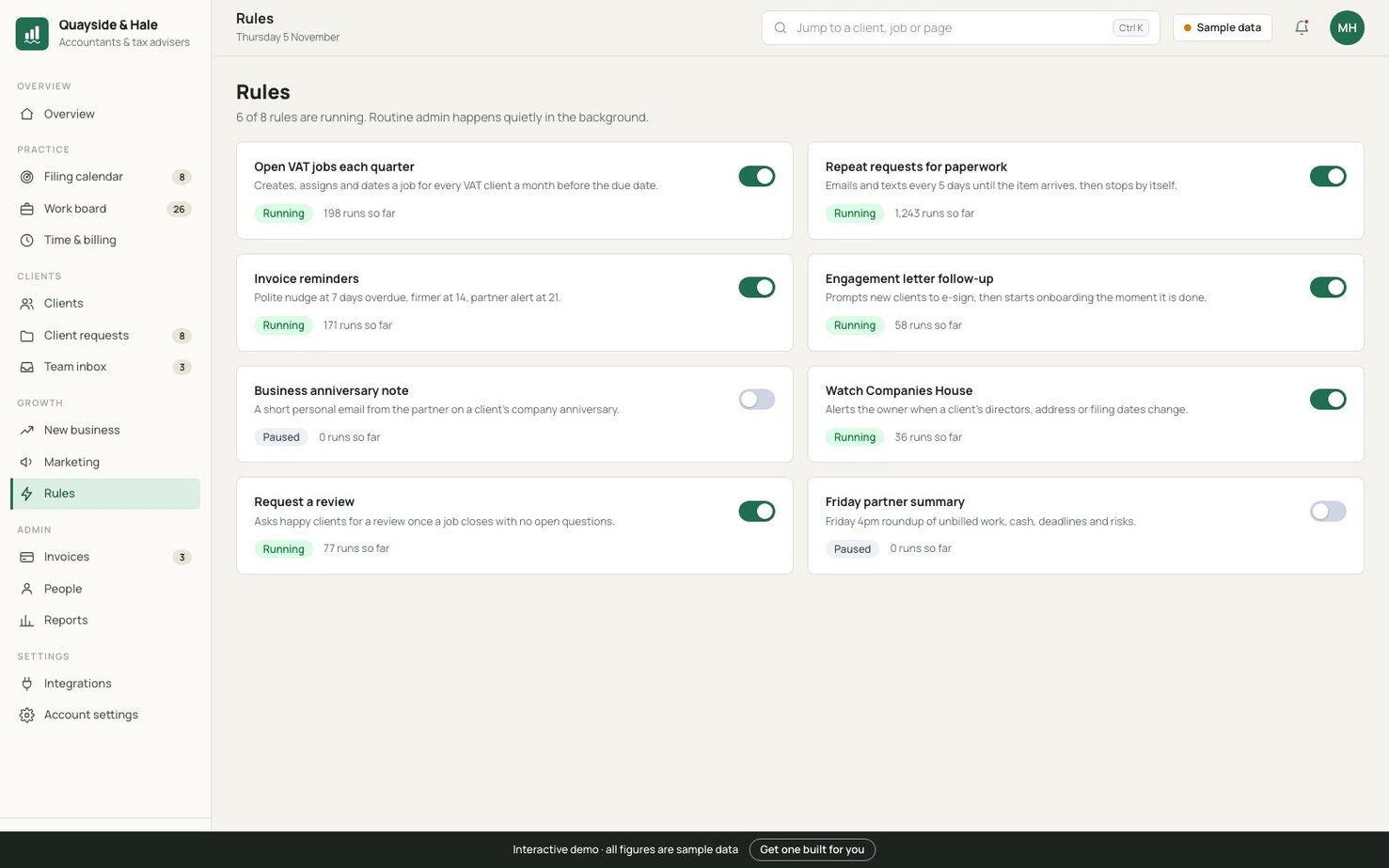
See it on one screen. Our accountancy dashboard demo shows rules like these running in the background, opening VAT jobs, chasing missing paperwork and sending invoice reminders, with an AI assistant for the team.
Salons and beauty businesses
While you've got your hands full. A stylist with foils in someone's hair can't answer the phone. Online booking and an assistant that handles routine questions mean fewer interruptions and fewer missed bookings.
No-shows. Automated reminders, and deposits where they suit your clients, are simple ways to protect your diary. There's nothing very clever about them, and that's the point.
Rebooking. A nudge when someone's usually due back is the sort of thing everybody means to do and nobody has time for.
Marketing. AI can help draft social posts and promotions for your quiet days, in your own voice. Your actual work should still be the star: real photos of real results, not AI-generated hair.
Keep human: the welcome, the consultation and the chat. That's what people come back for. Also keep a person on anything to do with allergies, patch tests or skin reactions.
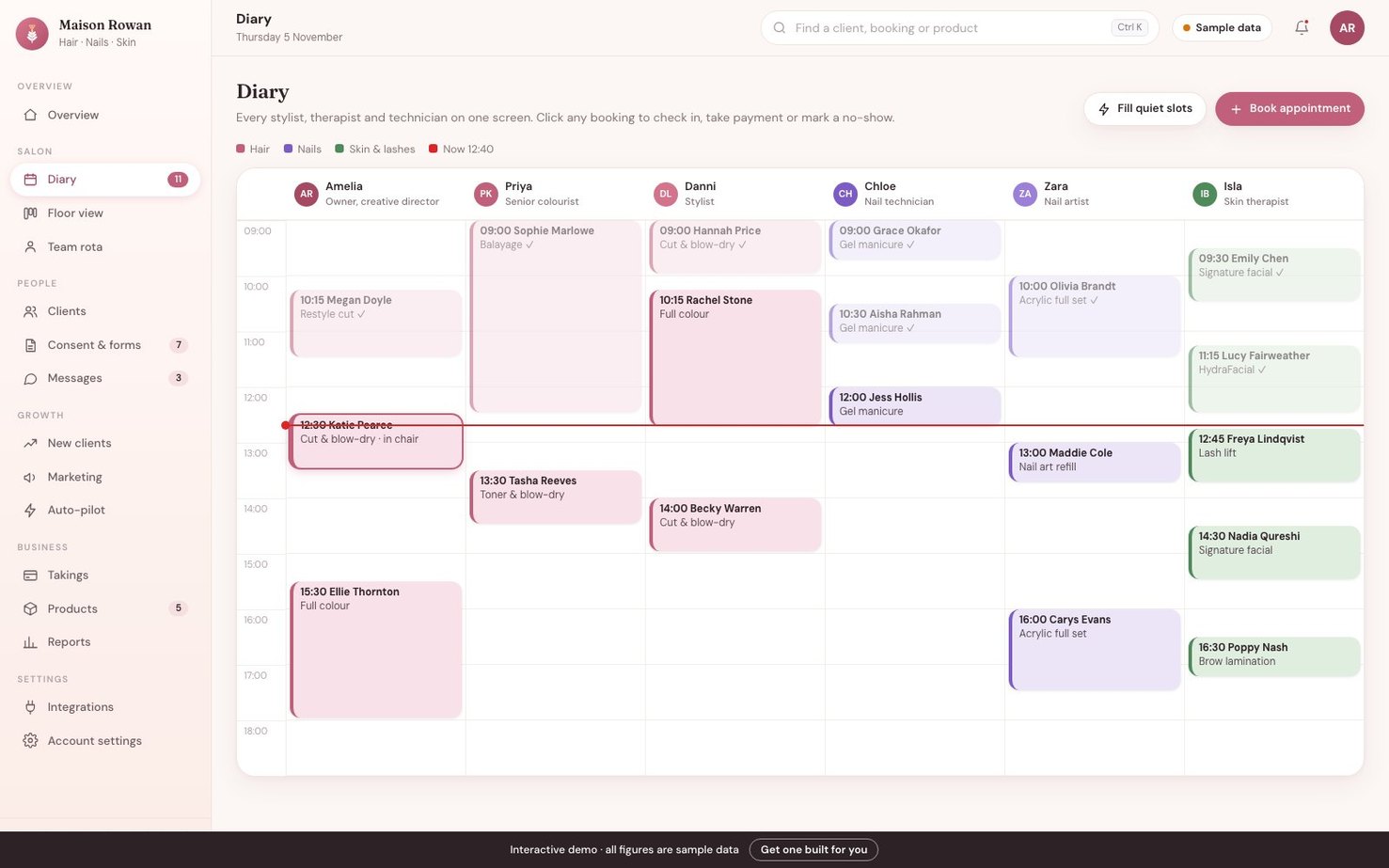
See it on one screen. Our salon dashboard demo has a colour-coded diary for every stylist and therapist, with reminders, deposits and rebooking nudges running on autopilot.
What these four have in common
Look across the sectors and the same patterns appear.
- Protect the front desk. Answering, sorting and booking are often the first wins, because they free up people to look after the customer in front of them.
- Remove the chasing. Reminders about payments, paperwork and appointments are repetitive and easily forgotten.
- Keep the expertise human. Clinical, legal and financial judgement stays with the people qualified to give it.
- Handle data with care. Dental, legal and financial records are all highly sensitive. Know where they go before you switch anything on.
Not on this list?
The same approach works for most businesses. Ask yourself what happens in your working day that's repetitive, follows a pattern and could be quickly checked by a person. For a marketing agency, that was campaign checks: our Google Ads Campaign Checklist gives Cambridge Xyz one place for client briefs and for signing off every check before and during a campaign. For a trade butcher, it could be getting orders and stock under control: our interactive demo for Chilled Out Foods in Stockport puts online, trade and phone orders on one board, with stock and use-by alerts, an optimised driver run and an AI assistant (real products, but the stock, orders and figures are sample data rather than live data, to protect customer privacy). Enterprise Nation found regular AI use at about 4% in construction, so if you're a builder who gets this right, you'll be well ahead of the competition.
Start with the job that annoys you most. There's usually money hiding behind it.
Want to know what AI could do in your sector? Book a free 20-minute chat.See our AI & automation service
Contact us →