

You did the work. You sent the invoice. Now you get to do a second, unpaid job: politely asking for your own money.
According to the government's response to its late payment consultation, late payments cost the UK economy almost £11 billion a year. Of the businesses surveyed, 22% spent staff time chasing them, and those firms averaged 86 hours a year. Hiscox's 2026 research, based on 1,000 UK small business owners and sole traders, estimates the average small business is owed £12,357 in late payments every year.
Software can't make a bad payer honest. It can make sure nobody ever slips through because you were too busy to send the reminder.
What to automate
Sending the invoice on time. A lot of late payment starts with late invoicing. Tie the invoice to a trigger, such as job marked complete, stage signed off or goods delivered, so it goes out that day rather than whenever someone gets round to it.
The reminder sequence. Most chasing is the same few messages, sent on predictable dates. For example:
- 3 days before the due date: a friendly heads-up, with the invoice attached.
- On the due date: "Just a reminder that this is due today."
- 7 days late: a direct request, asking them to confirm a payment date.
- 14 days late: hand over to a person.
Those timings are only a starting point, so match them to your payment terms and customers. Accounting packages often have reminders built in, so check what you're already paying for before buying anything new.
A payment link. Every step between "I should pay that" and "paid" is a chance to get distracted. Put a pay button or your bank details in each message.
Matching payments and stopping reminders. Nothing damages a relationship faster than chasing someone who paid last Tuesday. Reminders should stop as soon as money lands, and that depends on your accounts system being connected and up to date.
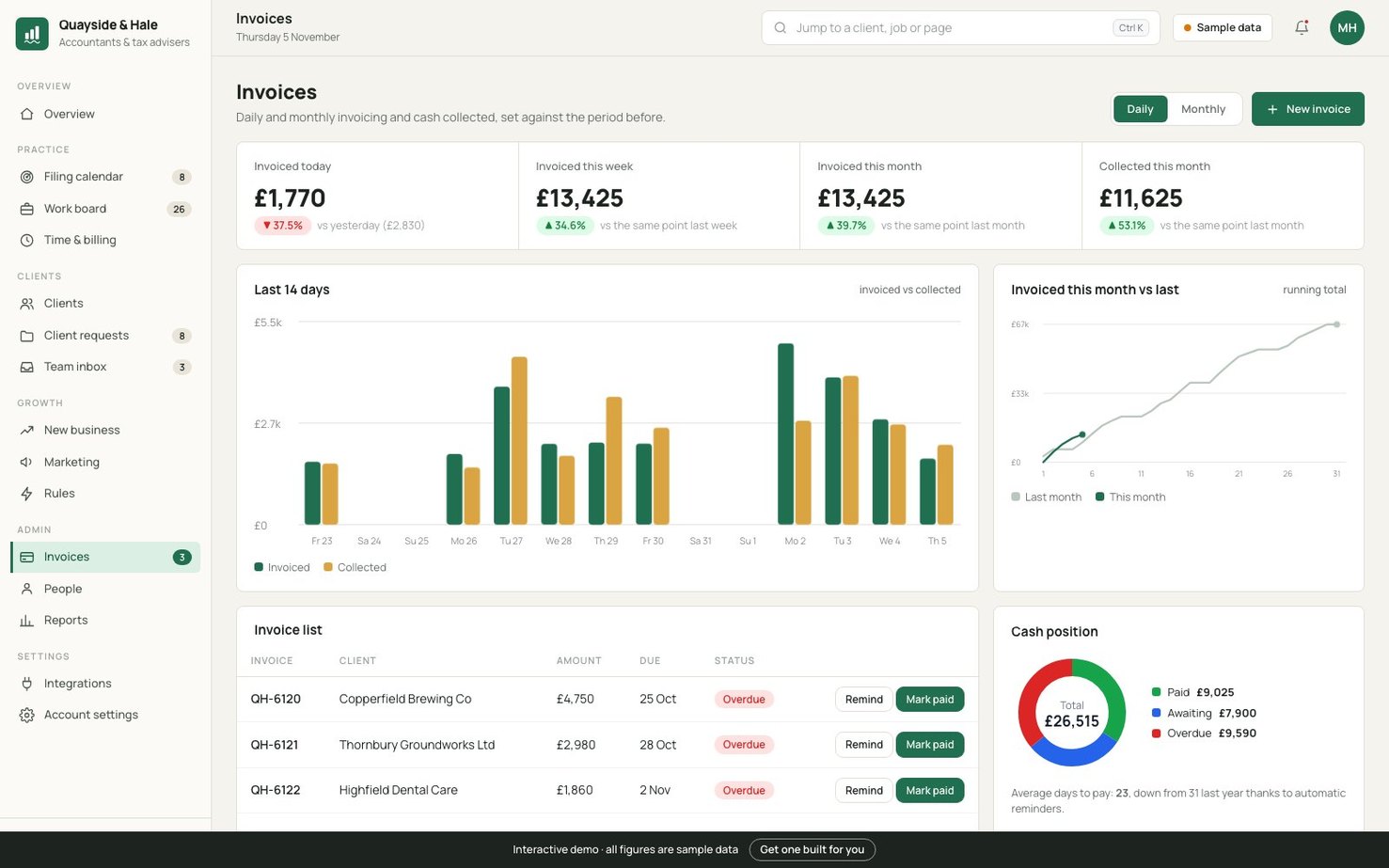
A simple view of who owes what. You want to see what's overdue, by whom and for how long, without building a spreadsheet every Friday. Here's how that looks in the accountancy dashboard demo we built at Just Creative People, where invoice reminders run in the background.
Where AI earns its keep
Plain automation handles most of the above. AI adds something when words and judgement come into it. It can read replies and sort them ("paying Friday", "that's the wrong PO number", "out of office"). It can draft a follow-up that refers to what the customer actually said. And it can summarise your overdue accounts in plain English each week.
Have a person check anything sensitive before it goes out, at least until you trust the results.
What to keep human
- Disputes. If a customer says the work wasn't right, that's a conversation rather than a reminder.
- Your best customers. One rude automated email can cost more than the invoice was worth.
- Anyone in difficulty. Reminders that carry on regardless do you no favours.
- The escalation decision. Whether to charge interest, stop work or call in a debt collector is a business call, and it's yours.
What the law already lets you do
Business customers in the UK have rules to follow, and many owners don't realise how much is on their side. This is general information rather than legal advice.
- If no payment date was agreed, payment is late after 30 days, counted from the customer receiving the invoice or you delivering the goods or service, whichever is later.
- You can claim statutory interest of 8% plus the Bank of England base rate, unless your contract sets a different rate.
- You can also claim fixed compensation: £40 on debts up to £999.99, £70 from £1,000 to £9,999.99 and £100 on £10,000 or more.
More is on the way. The government plans a maximum payment term of 60 days, no earlier than 2027, with some exemptions, and new powers for the Small Business Commissioner, including the ability to issue fines. Those changes still depend on legislation, so watch for confirmed dates.
Fix the start and there's less to chase
The best time to deal with late payment is before you start the work.
Agree payment terms in writing. Clear terms make every later conversation easier.
Bill in stages. On a longer job, smaller stage payments mean less money at risk and earlier warning of a problem.
Link payment to approval. This is how our own client projects work. In the Just Creative People Client Portal, clients sign the agreement online and approve each stage, and they can pay by card or bank transfer from the same place. Because they can see where the project stands and what's due, there's far less room for "I didn't realise".
Where to start this week
- Pull up your last 20 invoices and note how long each took to go out and to be paid.
- Look at what your accounting software can do already.
- Write your reminder sequence and switch it on for one type of customer.
- Look again after a month.
If your invoicing, jobs and accounts live in systems that don't talk to each other, that's when it's worth getting help to connect them. Either way, you should be doing the work you actually got into business to do, rather than spending 86 hours a year asking for your money.
Fed up with chasing? Book a free 20-minute chat about automating it.See our AI & automation service
Contact us →